An attempt at a sensational title: Trouble at the Venice Biennal!
The Polish Pavilion: ‘Trouble in Paradise’
This interview with Rafał Śliwa, the co-curator of the Polish pavilion at the 17th International Architecture Exhibition – La Biennale di Venezia was conducted via email in June 2021 for Manifold.
To show you what a specimen of grace and courtesy Rafał can be (quite pragmatic as usual), I proceed by stating that there should be no problem with sharing the message he sent me beforehand.
I like your questions very much! And I must admit some are very personal and I try to keep it on balance partly private but making it accessible to the reader.
*
Dear Yunus, Before starting with writing I must share with you that while reading questions I felt ambiguity, as if I could have answered them in two ways, either more public or more private. Had we been sitting together at the table I would give you more personal and intimate talk. Thinking about publishing it I restraint myself to the public language, getting as close as possible to private yet maintaining careful distance.
Thank you Yunus once again, for your sensibility, attention and care.
* * *
Yunus Ak: How is your mother?
Rafał Śliwa: She’s doing fine now, thank you.
Y: The second question, what made you feel so terrified? Mind to share?
R: Well, I stumbled upon it because the moment you asked me I realized I haven’t been thinking of her in a while. I wish she could see Venice for herself, hopefully in August this year. Parents are always around, no? Whether real or imaginary ones, authorities.
Y: You had black and white photos of ‘celebrities’ on the wall of your house in Coimbra. What does Spinoza mean to you?
R: That was a part of the atlas which I began to compose in 2015, back in Porto. It consisted of photos, postcards, antique prints and eventually these portraits, which I used to put on my wall. These faces were the personalities that influenced my way of thinking. I was curious what will change in my relation to them if I see their portraits every day. So, I printed them in the same proportion and hung them along the line around the height of my eyes when I slept. By that time, I didn’t know of Gerhard Richter’s ‘48 portraits’ which had some formal resemblance to it. Apart from various observations, I noticed a problem that there was no female. And there were brilliant females that influenced me, however this choice for print, while rendered formally, underlined a subconscious problem I had to solve. Hopefully I am past it. As for Spinoza I don’t really know.
Y: When did it occur to you, that you would be the curator of a Polish pavilion at the age of 29, with five of your friends? When you achieved your dream, did you ever sense a change in your feelings? Was there any moment at the edge of madness, wishing it had never happened?
R: That was almost two years ago, back in October 2019. This Biennale has an unprecedented timeline. Back then I was driven by the scale of the event and willingness to explore its possibilities. Together with my friend-collaborators (Mirabela Jurczenko, Bartosz Kowal, Wojciech Mazan, Bartłomiej Poteralski as PROLOG plus Robert Witczak) we felt we’re onto something different, but no one expected such complex outcome as 2020 unfolded. It is hard to fully reflect on this since we are still dwelling in this suspended time. However, in the middle point, exactly one year ago in May 2020, when we were ready to ship the exhibition and surprisingly the whole event was postponed to next year, I learned through exhaustion about the importance of a healthy balance between private life and work. This whole time was a sort of transitional period for me when my life was far from balanced or healthy. William Blake had this brilliant phrase, the road of excess leads to the palace of wisdom, but I wouldn’t yet say I’ve fully learned it. It’s better to wait for the whole process to end and make itself ready to be understood. Perhaps it still lasts.
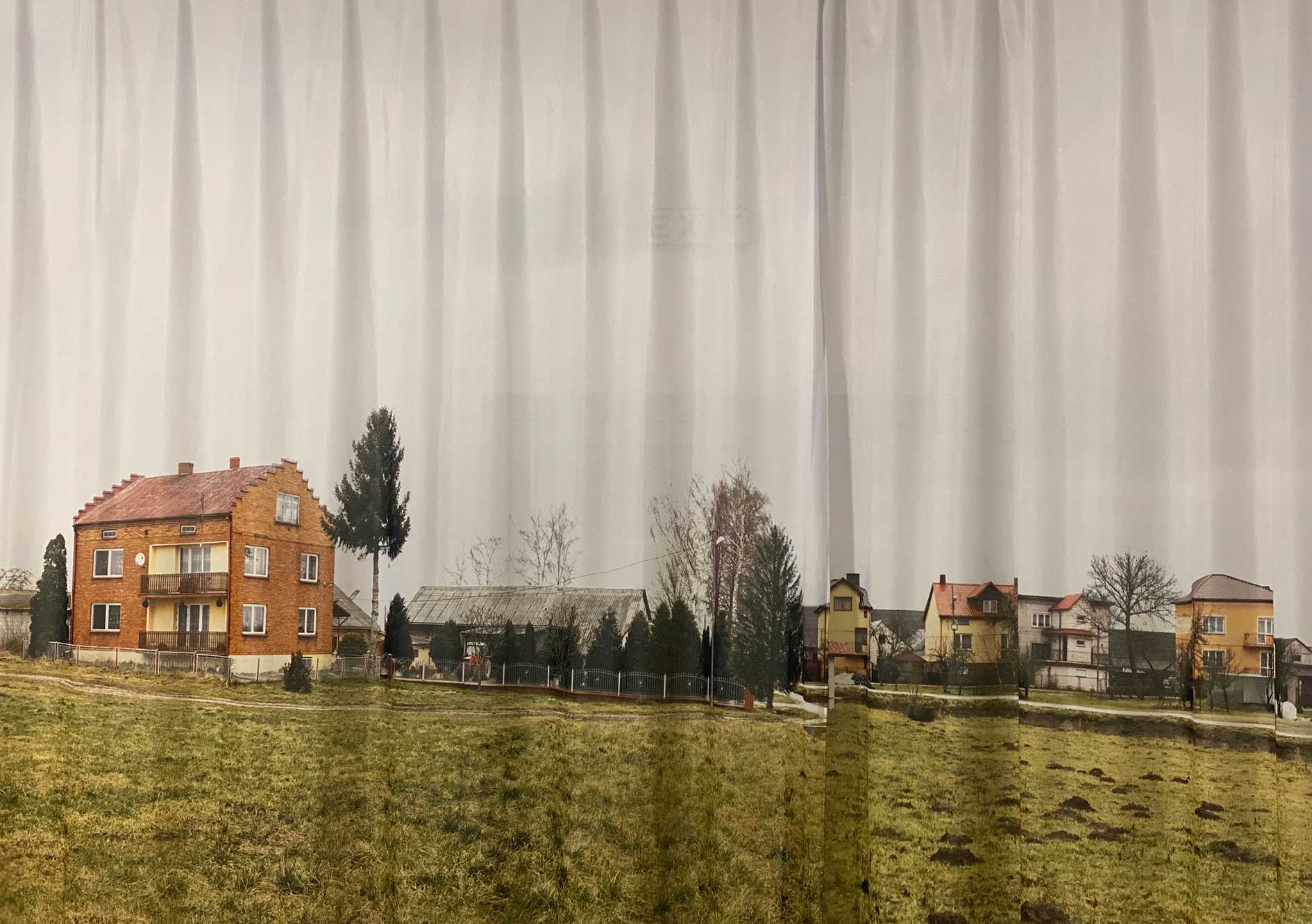
Trouble in Paradise, the Polish pavilion at the 17th International Architecture Exhibition – La Biennale di Venezia, curated by PROLOG +1, videos by Yunus Ak.
Y: What does ‘Trouble in Paradise’ mean to you? How does ‘Trouble in Hell’ sound instead? Is ‘Trouble’ perhaps in a limbo, between heaven and hell?
R: Indeed, there’s an ambiguity to this title, isn’t it? It contains hopes, fears, potentials and expectations about our perception of the countryside. I like it that you give a question mark besides both Trouble and Paradise. You are very right to interpret it as a space of limbo because we don’t really follow what happens there, whether it’s good or bad. Maybe the way the title works with this ambiguity resembles our position towards the countryside: we don’t have an accurate contemporary definition of it and the ones we use generate outdated images in our minds. Nowadays the countryside is the space of struggle between inhabitants and capital investment, often completely alien or global, which transforms it.
When the communist state fell and the government shifted its agenda to free market economy the countryside was open to investment which continues to infill the landscape with alien, contemporary forms: logistic centres, large-scale storage and production halls, motorways, housing and semi-detached houses development without proper infrastructure. With the automatization of agriculture, the relation of life and work in the countryside has dissolved and was not anymore reminiscent of past decades. More often people who move to the countryside are not typical farmers but recently used to be city dwellers. In the countries of the former Soviet bloc you can observe a migration from a city to rural areas which represents a tendency to own a piece of land and have a degree of freedom, which the city does not offer within the same budget. Thus, the reality confronted with people’s expectation of an idyllic landscape is something we wanted to represent by the title.
This subject for long enough was marginalized, and it seems surprising when you realize that 93% of areas in Poland by administrative division are regarded as countryside. Yet it remained almost invisible in the architectural discourse. The current moment is a process of transformation which is not complete yet and it is precisely what makes it so hard to conceptualize. There are many forces at play and no singular strategy. Perhaps it is the time for a more coherent project for the countryside. The title is an attempt to raise awareness.
To some readers it can occur as a reference to a movie and a book of the same title.
Y: How did the process go from the very beginning; do you have a recipe to offer for young curators? If you do, would you like to share? How can they get to meet important people? R: A few facts have to be said from the outset. In Poland the curatorial nomination for the exhibition in the Polish Pavilion at the Venice Biennale follows the process of an open competition in which anyone can participate who fulfils the requirements of the regulations. The competition is judged in an anonymous process by a Jury chosen by the Ministry of Culture and National Heritage (and Sports for a few months). It means that you may be at the beginning of your path yet produce a very convincing document which will be solid enough to foreshadow other proposals. Fortunately, that was our case. The experience we had back from 2015, as a small group of friends, was another curatorial proposal for Polish Pavilion on Allotment Gardens entitled Simple Stories which was awarded second prize then.
The subject however started this time from the personal interest of our friend Wojciech Mazan who brought to the table the case of State Agricultural Farms in Poland as a neglected artifact of communist state. He was then working on his dissertation proposal at the Architectural Association School of Architecture in London within the MPhil in Architecture and Urban Design: Projective Cities programme. His work proposes a theoretical and historical understanding of rural settlements in Poland. Its early stage of research served us as a foundation of our curatorial work. We quickly noticed it was a marginalized subject without a holistic approach in architectural discourse. Later we learned from the Jury that it was precisely what made the impact, to quote: ‘how is it possible that the subject of an area as large as 93% of the whole country was omitted until now?’ Of course, it was the power of a single narrative which underlined the dichotomy between urban and rural. That was a response to the competition submission: 36 pages booklet with curatorial proposal and exhibition scenario, plans, visuals, schedule and budget.
I’m not really a supporter of recipes however it seems important to find a subject that nails the zeitgeist, then to review it by iteration, again and again: discuss it, find gaps, undermine it and decide for the solid narrative then again discuss it and repeat the process. One has to be self-critical and be able to share it as we do in an open process. Additionally, since the Venice Biennale is an incredibly dynamic event, we aimed for a clarity of presentation by the strategy of three and thirty minutes visit. We wanted to make the exhibition accessible for a 3-minute walk-through but also maintain depth of content if someone decides to stay even 30 minutes.
Y: Would you like to mention the framework of the exhibition, or its ‘stages’ and ‘backstages’? I know you will answer this question as genuinely as you could; considering the process, what do Poland and the pavilion mean for PROLOG +1?
R: To be concise here I have to relate to your question chronologically. After we won the competition, we entered the logics of exhibition production which was consulted with the organizer Zachęta – National Gallery of Art in Warsaw. The timeframe was short, because we started in October 2019 and the exhibition was supposed to be shipped to Venice in April 2020. The closure of the budget is the moment when you enter realisation phase and the deadline follows the deadline. Thus starting in October we had time until December to revise the curatorial proposal and measure our resources. It considered refining the theme, defining our areas of research on the countryside, building up the structure of the catalogue, inviting participants (authors for catalogue, artists and photographers for analytical documentation and architects for projective part) and then planning the timeframe of production.
Thus in January we entered a proper stage of realisation. We went through numerous meetings with artists regarding the role of photography and construction of image, conversations with authors on specificity of their texts and a workshop session with invited 6 architectural studios which followed a number of online meetings. Despite exhaustion and a lot of effort everything was on time but when COVID was acknowledged in February things started to complicate and soon in early March Biennale was postponed to August 2020. We decided to keep up with our production schedule which ended up in finding manufacturers and producers for each exhibition element in March and realising it still in April. As most elements were ready in May, we learned that the Biennale was postponed to May 2021 which made everyone slowly lose their appetite. With such a long delay most of us thought it could be even cancelled.
In these new circumstances every curator had to confront an unpleasant but critical question: how will we reflect on our own exhibitions in one year if it is now finished to be exhibited? Will our work ossify or become even more urgent? For us this momentum sparked with two initiatives: the local one and international one. Locally we decided to produce an Appendix to the exhibition which simply meant development and expansion of an already existing material. We opted to produce more content while avoiding the typical logics of production and financial support. In the end we prepared a series of Online Debates with the organizer of the exhibition, developed another publication called Poniatówka/Nowa Poniatówka, co-edited architectural magazine called RZUT exclusively on countryside, produced a sneak peek video, developed a Glossary to the analytical part available on website, created an online version of the curatorial project and right now we are finishing a series of interviews with our participants in projective part, explaining their work.
The international initiative was an outcome of the very fortunate online meeting organized by Hae-Won Shin, the curator of the Korean Pavilion, with over 50 national pavilion curators and the general curator Hashim Sarkis invited. It was the beginning of the Curators Collective, an unprecedented network of curators which became more than a support group and place for exchange of knowledge. During regular meetings we attempted to work together on a series of events and projects which hopefully will be presented in August and November this year. It is the first time when curators get to know each other and try to collaborate prior to the opening of the exhibition. That is only possible due to postponement since in typical circumstances there is no time for such initiative, when every curator is focused on being on time with their work. As a long-term plan, we hope to secure this platform of communication to next curators, because we feel we benefit from it. I like to quote Dirk Somers, the Belgian Curator, who coined this comparison, that Curators Collective makes this Biennale more like the United Nations than Eurovision Contest.
As for your question what Poland and Pavilion means for PROLOG I don’t feel at ease to say. I think it is a ground to be explored yet, because I can’t say that we have an architectural culture in Poland which we can follow. Perhaps we are the part of the generation that is responsible for building it now. My personal guess is that territorial and political instability of this country rendered it unable to develop a consistent culture of built environment, and the opening for global capital at the end of the 20th century seduced architects for foreign experience. I think we have a lot of work to do at home.
Y: What did you find the most challenging in terms of the method and the organization of the exhibition?
R: I think estimating the efficiency of curatorial concept against the budget and logics of production. This was the early stage before embarking on production. We spent over a month making a circle around ourselves to refine the strategy. Scenography ended up as a concept not so far away from the competition proposal. Yet what is always at stake is the question whether formally it will work in the exhibition space, in full scale, which you can only test with a full-scale mock-up which we couldn’t afford. In terms of conceptual strategy, it maturized: to divide countryside into three spatialities of territory, settlement and dwelling, to think of commons as a consolidating element between public and private realm and ultimately to aim for architectural vision of life and work as a project in the countryside. That reflected the need for an overall coherence of the project. Back then this concept was a hypothesis. Now the form of an exhibition serves its evaluation.
Y: What do you think was the biggest difference from previous Polish pavilions?
R: It’s hard for me to judge since the only other exhibition in the Polish Pavilion I have visited was in 2016 entitled Fair Building by curator Dominika Janicka, in cooperation with Martyna Janicka and Michał Gdak. To put it in more general terms, perhaps the difference lies in the architecture-oriented approach. We clearly aimed for strict analyses and research-based projects that are form-generative in architectural terms. In the catalogue you can find both chapters exemplified by typical drawings of plans and sections, preceded by source based analytical text, as well as projects which were presented by models, basic set of drawings and visuals. It’s a down to earth approach that ultimately underlines that we are interested in architectural form and what it contains. Every built element carries information and serves as an evidence to its times.
Y: As a young curator, I wonder why you would so tirelessly embrace the work and keep talking about ‘Trouble in Paradise’ despite the monotony of making similar statements over and over, perhaps in anxiety and thrill? Would you like to say a few words about that?
R: If only I understood your question well you refer to the curatorial tours in the pavilion? Once you find something convincing for yourself you try to communicate it with the public. I guess it’s a process of self-reflection and enabling space for criticism. This sort of way of presentation is at once an attempt to find a new way of telling the same story but also testing it with the audience. It’s an ongoing process to which I don’t have an answer yet. Hopefully in a year I’ll be able to reflect on that.
Y: What would make you happier and more blessed from now on? Becoming a star architect?
Please answer this considering your practice in architecture.
R: A good place. For life and for work.
Y: If the questions are silly and boring, would you like to ask a question to yourself or me? Neither you nor I have to answer these questions.
R: ...
Y: Rafał, thank you!
Hope to see you somewhere. Yunus, your friend from Porto.